

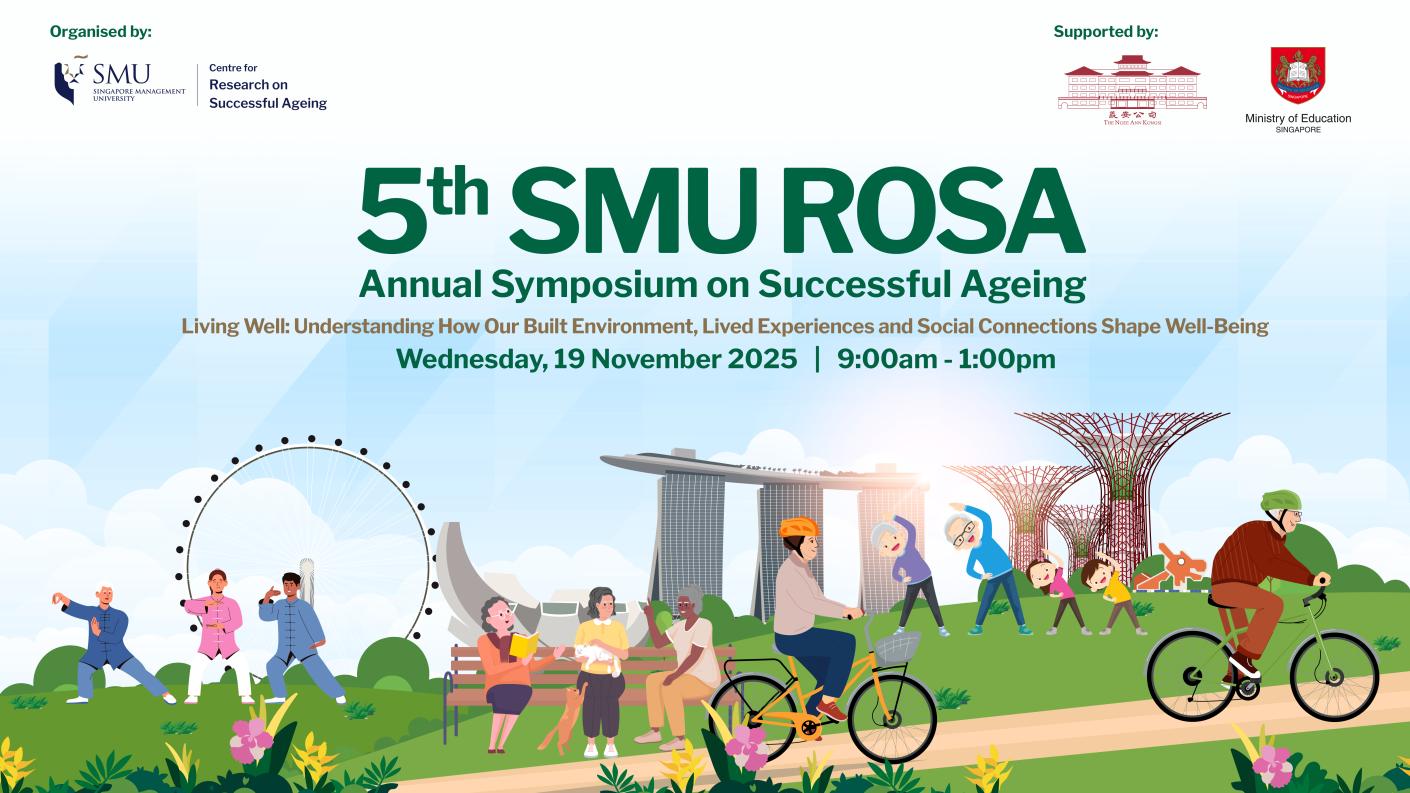
5th SMU ROSA Symposium on Successful Ageing
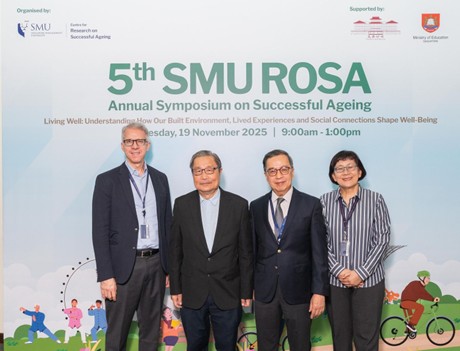
This year, ROSA held its 5th Annual ROSA Symposium on Successful Ageing on 19 November 2025, both online and in-person at the SMU Mochtar Riady Auditorium. The theme of this symposium was “Living Well: Understanding How Our Built Environment, Lived Experiences and Social Connections Shape Well-Being", in which the symposium explored how our environment can better sustain our ageing population by enhancing lived experiences and social connections of older adults. It featured discussions between academic experts on the policies that can be implemented to tackle social issues arising from an ageing society in Singapore. In total, more than 250 participants attended the symposium, both physically in-person and online.
WELCOME ADDRESS
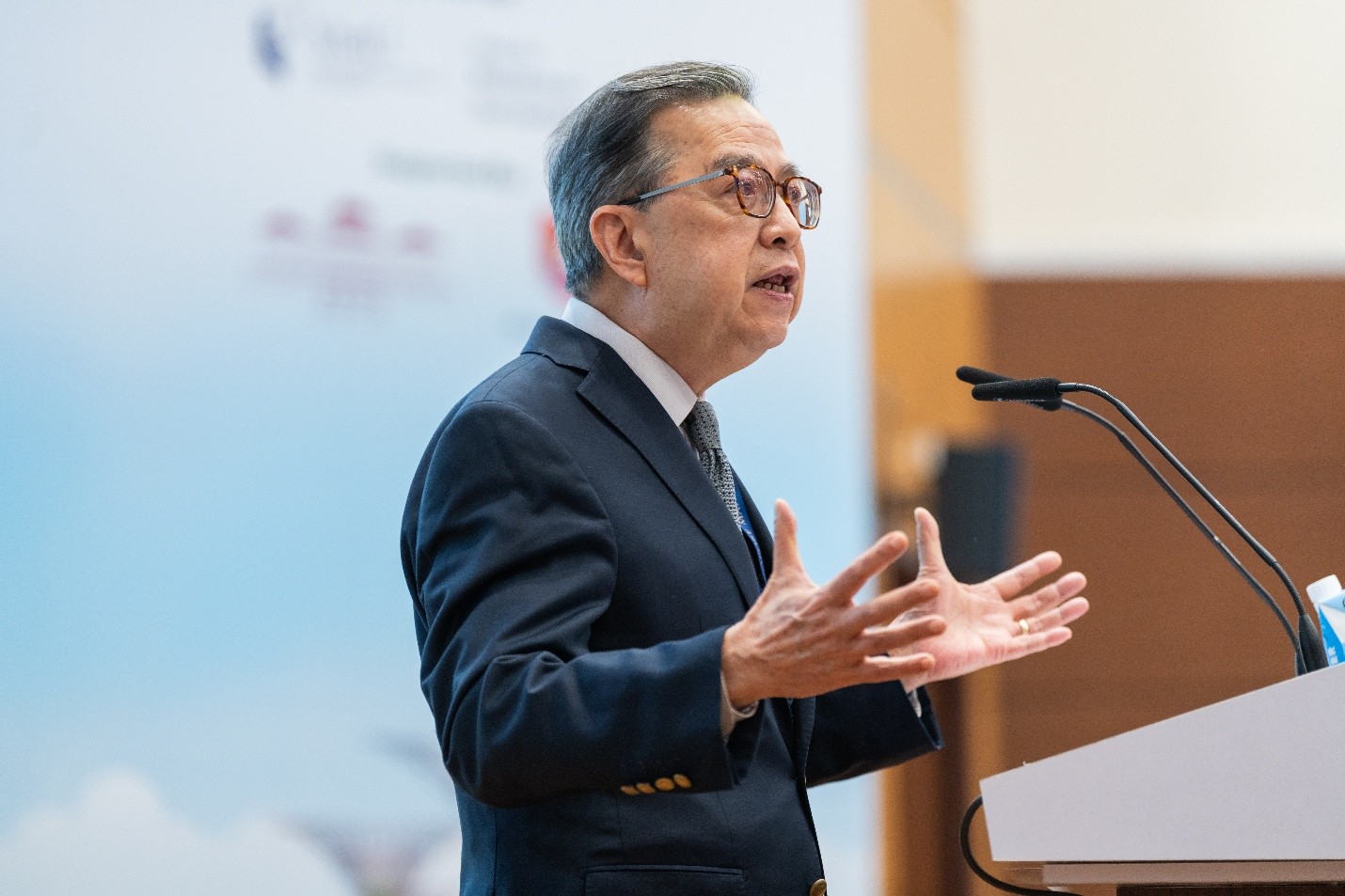
Professor Alan Chan, Provost of SMU, commenced the 5th ROSA symposium with an insightful welcome address where he highlighted that ageing well is not simply about healthcare, it is about designing environments and social systems that empower older adults to live with connection and purpose. He highlighted that this is particularly important for Singapore as it will become a super-aged society in 2026, which is a complex challenge that has profound implications for care, family life and social connections.
He acknowledged that ROSA is a “jewel” in SMU, whose research on ageing enables it to not just focus on academic pursuit, but also produce meaningful impacts that produce benefits for society in collaboration with government agencies, organisations, the private sector and other partners.
ROSA’s Translational Research, by Prof Paulin Straughan, Director and Principal Investigator, ROSA
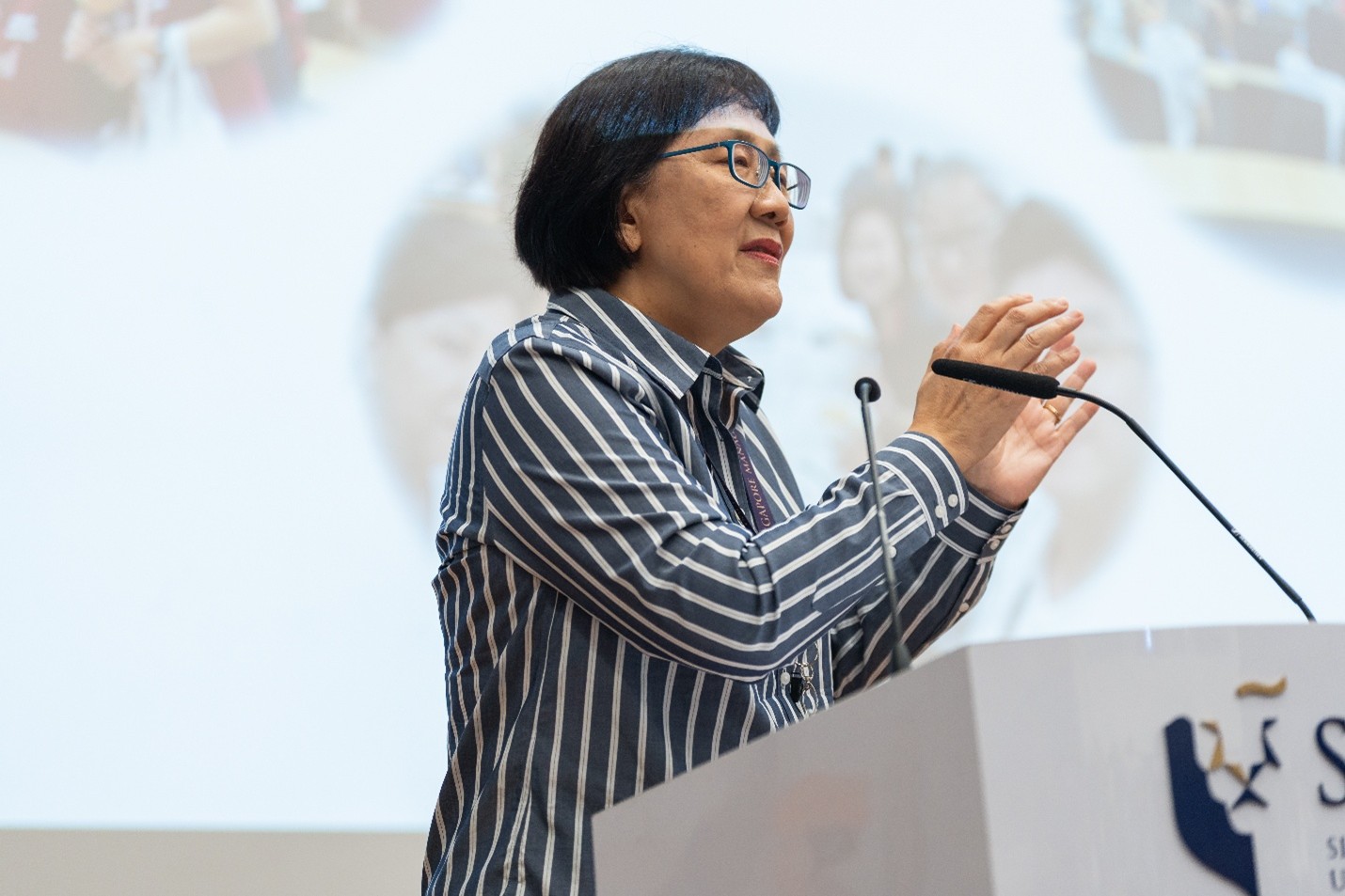
Thereafter, Professor Paulin Straughan delivered a presentation on ROSA’s translational research. She highlighted that with the support of The Ngee Ann Kongsi, ROSA had been focusing on supporting impactful translational research such as Project Silverlight, a year-long project aimed at redefining social engagement and participation of older adults in the community. She also highlighted that such support has been crucial in supporting the Singapore Life Panel®, a longitudinal study that surveys over 10,000 older adults in Singapore that allows ROSA to better understand feedback from older Singaporeans on new policies.
She also showcased examples of ROSA’s collaboration with industry partners and government agencies on joint research. Moving forward, she hopes that ROSA’s research will meet the emerging needs of young seniors and bridge the inequality gap for the vulnerable.
PRESENTATIONS
1. Low Fertility and Population Aging: Japan at the Forefront, by Prof James Raymo, Professor of Sociology at Princeton University
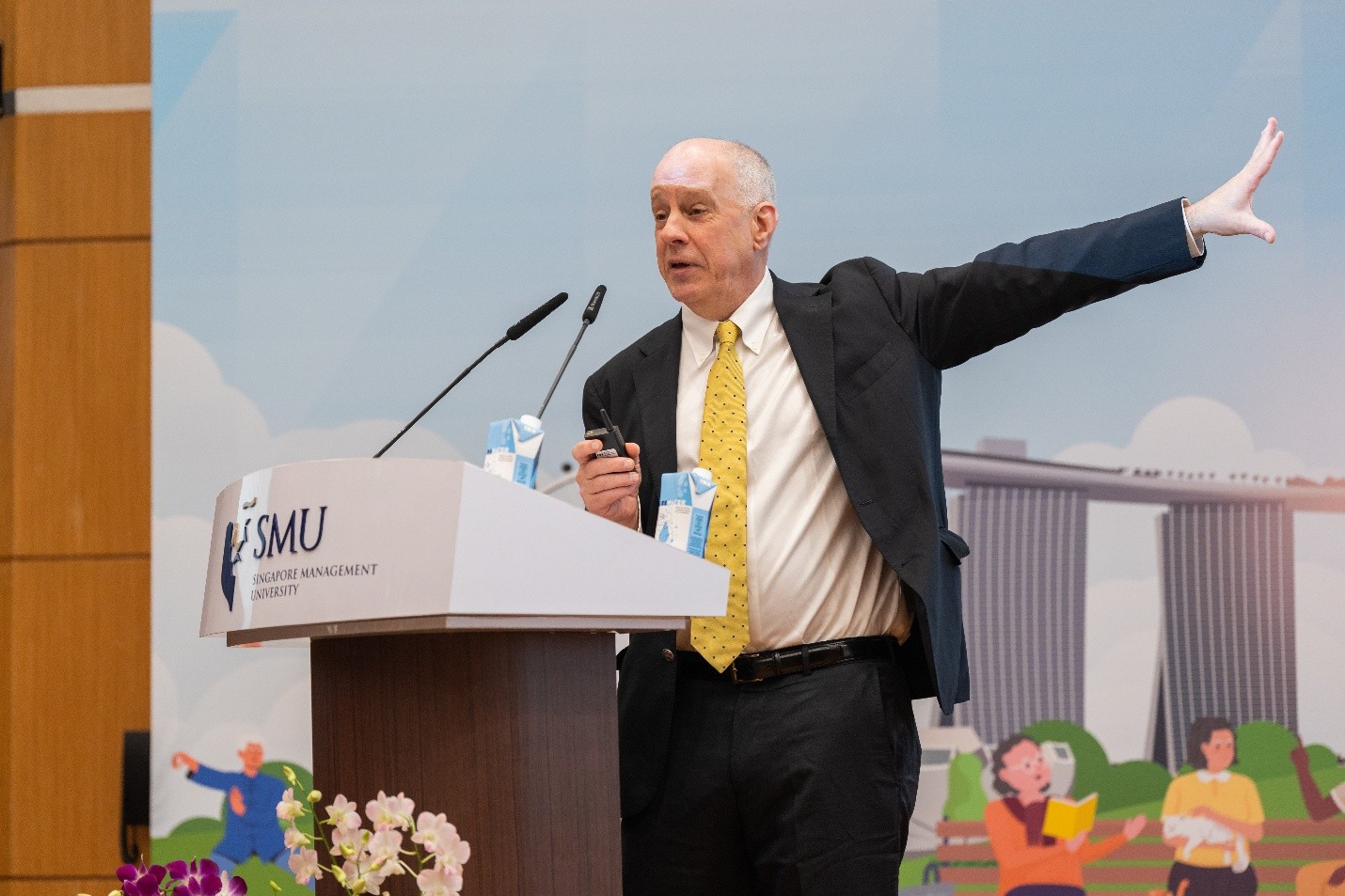
In his presentation, Professor James Raymo sought to introduce the demographic perspective in understanding the unprecedented population ageing in Japan and East Asia. He sought to invoke a life course perspective, in which the life experiences of older adults are shaped by the social and lived environments. To illustrate his point, he presented data from Japan, which he described as the harbinger of East Asia’s and Singapore’s demographic future.
Some other key findings of the presentation include:
- Major East Asian countries such as South Korea and Japan are experiencing rapid population ageing.
- The proportion of Japanese older adults living with their children decreased from 69% in 1980 to 34% in 2022
- Japan is experiencing rising rates of divorce at older ages, solo living, and lifelong singlehood, with childlessness staying consistent at approximately 33% between 2005 to 2020
- Family changes are closely related to social and economic changes such as educational expansion, labour market bifurcation, and possibly shifts in social cohesion.
He highlighted that these family changes are important as they alter the networks of tomorrow’s older populations, pose major implications for the built environment outside large urban centres, such as rural depopulation, and limit policy options due to reduced access to family support.
2. Living Well: The Built, Lived, and Social Determinants of Well-Being, by Prof Paulin Straughan, Director and Principal Investigator, ROSA
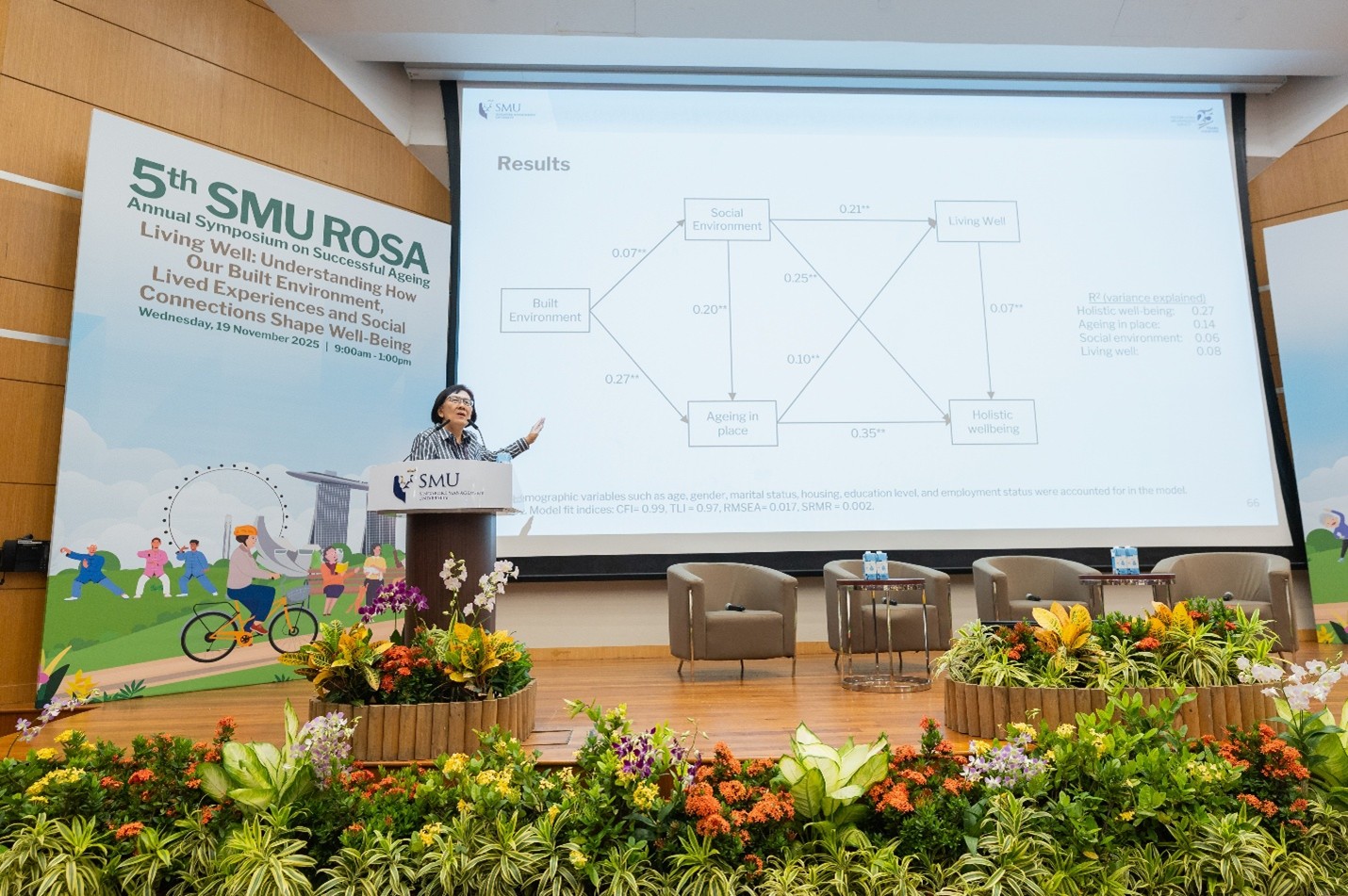
In her presentation, Professor Paulin Straughan showcased ROSA’s latest research on the built, lived, and social determinants of well-being, with a focus on pro-health behaviours. Specifically, she discussed Healthier SG, a national initiative by the Ministry of Health (MOH) that seeks to assist Singaporeans in taking steps towards better health and quality of life across their lifespan.
Key findings include:
- There is high utilisation and support of Healthier SG among older adults. 53% of respondents have enrolled in Healthier SG, and a further 21% intend to do so. More than 90% of respondents indicated they slightly agree to strongly agree to support the initiative.
- Aligned with the promotion of preventive care under Healthier SG, 82% of respondents either agree or strongly agree that regular health screenings are important.
- While Healthier SG encourages continuity of care by allowing individuals to choose a family doctor, more than 80% of respondents agree strongly that they will still seek other doctors even if they enroll in Healthier SG.
- When respondents were asked about nutri-grade labels, 82% responded that they are aware of these labels. Among these, about 80% indicated that the labels influenced their choice of beverage.
- Aligned with the promotion of physical activity under Healthier SG, only around 39% of respondents do not engage in vigorous physical activity, and 29% do not participate in moderate activity. On average, excluding those who indicate difficulty walking, respondents walk about 4 days per week.
These findings were used to create an index to measure “living well”, consisting of Healthier SG enrolment, physical activity, healthy dietary options, and nutri-grade influence on beverage choice. Professor Straughan presented a hypothesis model which showed that the built environment positively predicts both social environment and ageing in place, which in turn shape living-well behaviours and ultimately contribute to holistic well-being. She noted that these results highlight the importance of intervening “from the roots” by strengthening the everyday environments in which older adults live, interact, and make health-related choices.
DISCUSSION SESSION
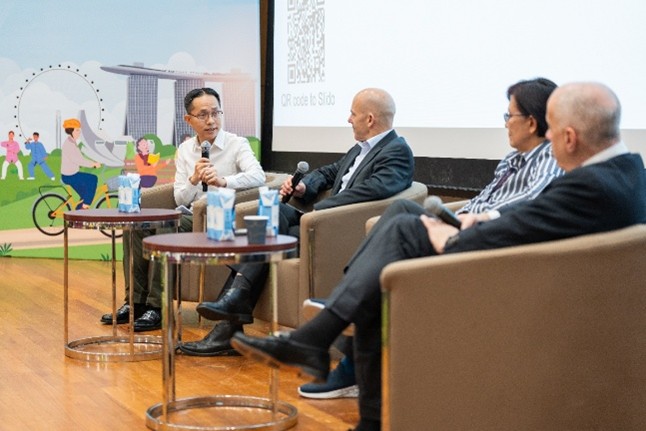
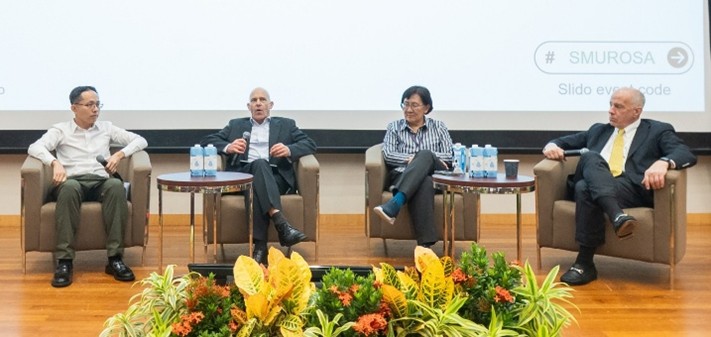
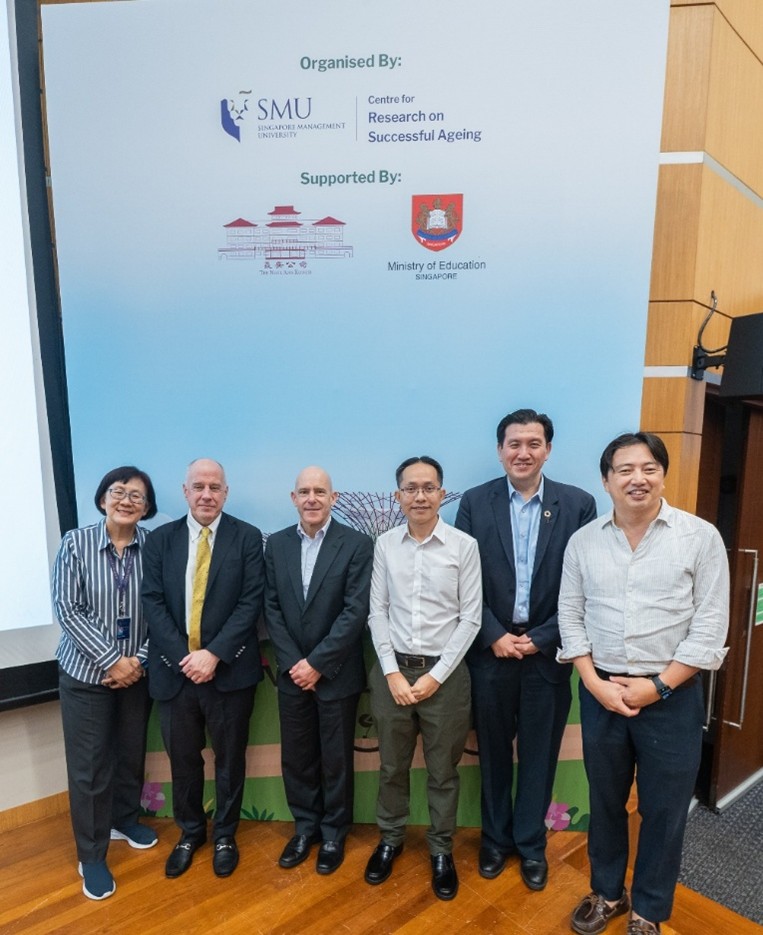
From Right to Left: Prof Paulin Straughan, Prof James Raymo, Prof Nicolas Cherbuin, Assoc Prof William Tov, SMU Vice-Provost Cheong Wei Yang, Assoc Prof Seonghoon Kim
Professor Raymo and Professor Straughan were joined by fellow panellist Professor Nicolas Cherbuin, Associate Director at the National Centre for Epidemiology and Population Health, Australian National University, for a meaningful discussion session focusing on strategies to tackle social issues arising from an ageing society in Singapore. The discussion was moderated by ROSA’s Deputy Director, Associate Professor William Tov.
Professor Cherbuin shared findings from his 20-year study on the biological and lifestyle factors shaping the ageing process, highlighting that risk factors such as hypertension and high blood pressure are driven by exposures that occur decades before symptoms appear. He emphasised that key behavioural drivers do not differ much by age or gender, underscoring the importance of early-life interventions to support healthy ageing.
Professor Raymo highlighted that geographic variation profoundly shapes the ageing experience, drawing on Japan’s rapid rural depopulation and the closure of local amenities, which heighten inequality and limit opportunities for older adults. While policies can support seniors, their ability to correct deep-rooted socioeconomic gaps is limited; access to enriching activities, social engagement, and supportive environments remains uneven, particularly outside major cities.
When discussing practical interventions to support ageing well, Professor Straughan highlighted the potential of neighbourhood malls as meaningful “third spaces” for seniors, noting that hawker centres and food courts can curate senior-friendly menus, offer smaller portions and adopt healthier preparation methods, while malls can also facilitate intergenerational interaction through co-located childcare centres. In addition, Associate Professor Seonghoon Kim, ROSA’s Deputy Director, suggested that a more holistic evaluation framework could help government agencies better identify which interventions create the greatest value, thereby supporting thoughtful and effective resource allocation.
An audience member asked how youth can be prepared to live in a society with extended longevity. The panellists agreed that preparing young people for their own ageing journeys is essential. Professor Cherbuin encouraged shifting the mindset that “ageing happens later” by linking ageing to youth-relevant themes such as mental health, diet and exercise. Professor Raymo suggested cultivating demographic literacy so younger generations better understand what a super-aged society entails, noting Japan’s strengths in intergenerational activities but weaker integration across households. Professor Straughan reiterated the importance of reframing ageing by showcasing seniors’ contributions and creating spaces that reinforce their ongoing significance, positioning ageing as a life stage of opportunity rather than decline.
CONCLUSION
The ROSA team would like to extend our heartfelt gratitude to our Guest of Honour, Vice President of The Ngee Ann Kongsi Mr Wu Chiaw Ching for gracing our symposium this year. On this note, we would like to express our gratitude and heartfelt thanks to The Ngee Ann Kongsi for supporting ROSA’s research through the years. We would also like to thank Professor Alan Chan, Provost of SMU, for his support of ROSA’s work and for delivering the welcome address, and to our esteemed panellists for their enriching presentations and discussions. Last but not least, we would like to extend our appreciation to all our colleagues, students, guests, and Singapore Life Panel® members who contributed meaningfully to the discussions, without whom our event would not have been successful. For those who would like to revisit the key moments, the symposium highlights can be viewed here.
This event was made possible with the generous support of The Ngee Ann Kongsi.
As always, please reach out to rosa@smu.edu.sg should you have any queries about this event or future ones!